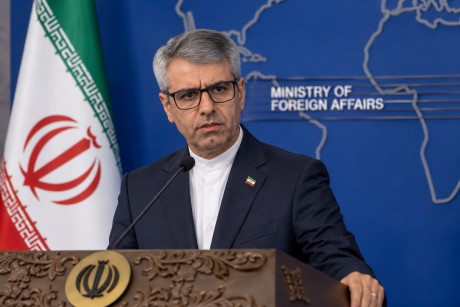
Iran has firmly dismissed any allegations of its involvement in the Yemen conflict, asserting that the Houthi forces act autonomously and make decisions independently of Tehran. This was stated by Esmaeil Baghaei, the spokesperson for the Iranian Foreign Ministry, who emphasized that Iran does not meddle in Yemeni matters. He refuted claims that connect Iran to the recent developments between Saudi Arabia and Yemen, pointing out that the roots of the conflict lie within Yemen itself.
In a related development, Baghaei announced that a scheduled meeting in Oman, which was to include Iran and Gulf countries, had been delayed at the request of Saudi Arabia. This meeting was aimed at discussing regional security and fostering cooperation among the nations. Despite this setback, Baghaei highlighted that Iran and Oman had already finalized an understanding regarding maritime navigation in the Strait of Hormuz, and the two nations would determine the next steps independently.
Oman’s Foreign Minister, Badr Albusaidi, confirmed the postponement of the regional meeting, explaining it was done to encourage consensus among the involved parties. Albusaidi reiterated Oman’s dedication to dialogue and stability in the region, as well as its commitment to fostering long-term cooperation.
While the postponement of the talks temporarily halts regional discussions, the finalized agreement between Iran and Oman on maritime issues remains an important development. This understanding underscores the commitment of both nations to address strategic matters in the Strait of Hormuz, a vital maritime passage, and indicates their willingness to continue bilateral progress independent of broader regional dialogues.