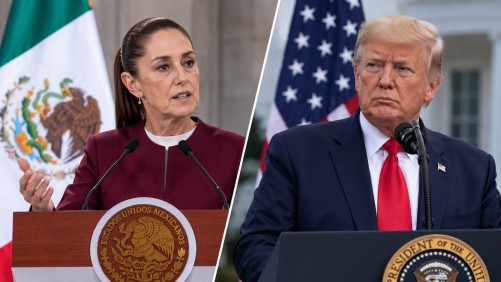
The ongoing drug crisis between Mexico and the United States has prompted a heated exchange between Mexican President Claudia Sheinbaum and former U.S. President Donald Trump. Accusations and calls for accountability have surfaced as both countries grapple with the intertwined issues of drug trafficking, corruption, and organized crime.
President Sheinbaum responded to Trump’s criticism of Mexico’s efforts in combating these challenges, asserting that Mexico is fully aware of its internal issues and is actively addressing them. During a morning press conference, Sheinbaum emphasized that Mexico should not be judged from outside and highlighted her government’s commitment to dealing with these problems. She also urged the U.S. to focus on its own role in the drug crisis, particularly concerning drug consumption, money laundering, and the illegal arms trade.
Sheinbaum questioned the measures taken by the U.S. to tackle cross-border drug trafficking and the flow of illegal firearms into Mexico, which she claims bolster the firepower of criminal organizations. She advocated for more robust actions from the United States to curb opioid addiction and consumption domestically.
Trump has previously called on Mexico to intensify its crackdown on officials allegedly linked to drug cartels and organized crime. His administration highlighted various arrests, seizures, and prosecutions executed by the Mexican government but demanded further steps against corruption.
Defending her administration’s record, Sheinbaum cited efforts such as Operation Swarm, which targets criminal and corruption networks, as evidence of Mexico’s commitment to addressing these issues. She stated that Mexican authorities have prosecuted officials suspected of criminal links when credible evidence is available, irrespective of political affiliations.
In her concluding remarks, Sheinbaum called for transparency regarding U.S. efforts to combat fentanyl trafficking and domestic drug consumption. She stressed that both nations must acknowledge their respective responsibilities in handling the cross-border drug crisis, advocating for a collaborative approach to resolving these complex issues.