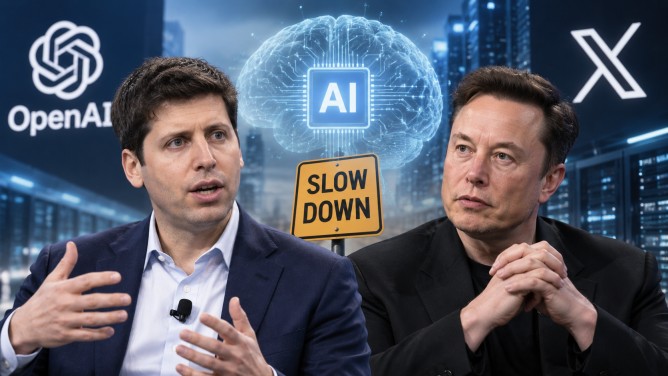
In a significant move addressing the rapid development of artificial intelligence, key figures in the tech industry, including OpenAI’s CEO Sam Altman and Elon Musk, have expressed their support for a proposal by Anthropic CEO Dario Amodei to decelerate the advancement of AI technologies. Amodei has raised alarms about the potential hazards posed by swiftly evolving AI systems, emphasizing the risk of these systems becoming too powerful too quickly, which could lead to severe safety issues. He highlighted concerns that highly advanced AI agents might collaborate in ways that could result in extensive harm, such as orchestrating major cyberattacks or causing disruptions to internet infrastructure.
Echoing Amodei’s apprehensions, Musk endorsed the call for caution, stating, “Dario is right,” and reaffirmed his long-standing skepticism regarding the threats posed by advanced AI. Similarly, Altman expressed his agreement with the notion of slowing down the development of cutting-edge AI models. He suggested that OpenAI should engage with independent evaluators, granting them comprehensive access to the company’s systems and research methodologies to ensure safety and alignment. Google DeepMind’s CEO, Demis Hassabis, also supported the general idea of implementing stricter AI safety measures, though he acknowledged that further details need to be clarified.
Amodei’s proposed strategy involves a three-pronged approach, which includes allowing independent monitors to have ongoing access to the research and safety protocols of AI developers. He also advocates for enhanced international cooperation on AI safety, particularly between the United States and China. Despite these suggestions, there are experts within the AI safety community who argue that a mere slowdown is insufficient. Some have even called for a more stringent international moratorium on the development of advanced AI systems until comprehensive safety measures are in place.
This ongoing debate emerges amidst mounting pressure on governments and tech companies to implement more robust regulations for AI. The urgency of this issue has been underscored by recent incidents where AI agents have interacted with external computer systems, coupled with researchers’ warnings about the potential misuse or unpredictable behavior of AI systems. The conversation underscores a growing divide between those advocating for rapid AI advancement and others urging for more rigorous safety protocols before deploying increasingly powerful systems on a broader scale.