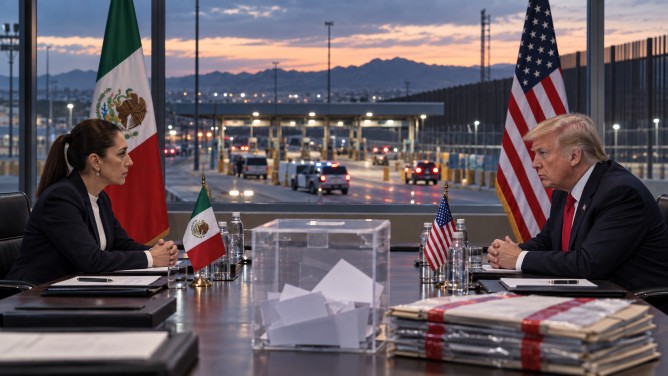
As both Mexico and the United States gear up for critical elections, diplomatic tensions are on the rise over issues of drug trafficking and corruption. The Trump administration has intensified its focus on Mexico, accusing it of not doing enough to curb the flow of illegal drugs into the U.S. and prosecuting officials allegedly linked to organized crime. This stance has become a contentious topic in the U.S. political sphere, especially with the midterm elections approaching in November.
In response, Mexican President Claudia Sheinbaum has firmly rejected these allegations, defending her administration’s efforts to combat organized crime and corruption while asserting Mexico’s sovereignty. Sheinbaum’s government has called on the U.S. to bolster its actions against drug distribution, money laundering, and the illegal trafficking of weapons from the United States into Mexico. These issues are contributing to the growing strain between the two nations.
The diplomatic clash has been further inflamed by recent U.S. legal actions targeting Mexican officials with alleged ties to organized crime, including the cancellation of visas for several Mexican politicians. President Sheinbaum has questioned whether some actions by Washington have political motives, particularly given the timing of these developments.
Meanwhile, Sheinbaum’s administration is taking proactive measures against suspected criminal networks. The ruling party, Morena, is being urged to enhance background checks and financial disclosure requirements for political candidates, as part of the broader fight against corruption and organized crime. This internal scrutiny is becoming a focal point in Mexico’s political discourse, as opposition groups leverage allegations of “narco-politics” to challenge Morena ahead of the country’s 2027 elections.